We Let AI Draft Our Client's Monthly Close. Here's What Happened.
Insights
Jun 3, 2026
A real monthly close for a B2B e-commerce client, start to finish — what the AI did, what a CPA had to override, and why it went from four days to a day and a half.

Published
Author

Isaac Lee, CPA
Founding Member, Accounting & Tax
Why we're telling you this instead of just saying "we use AI"
Most accounting firms mention AI somewhere on their website these days. Few say what it actually touches, what a human still checks, or where it got something wrong.
So here's one real monthly close for one of our B2B e-commerce clients, with the AI's work and the human's work both left visible. Details are anonymized. The mechanics aren't.
The starting point
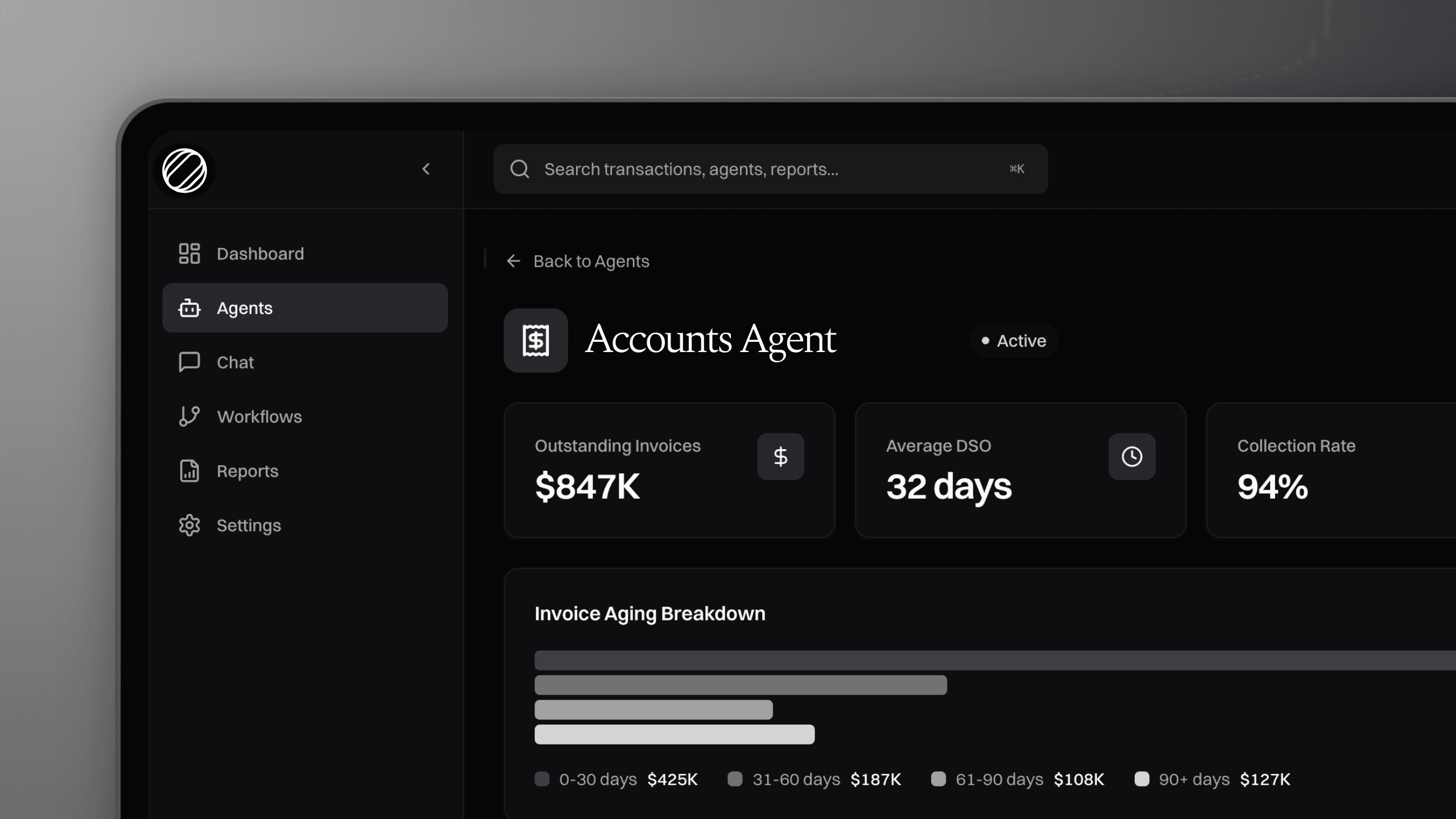
The client sells through a mix of channels, all connected to Stripe for payment. That Stripe account feeds directly into our AI platform, so transactions show up as they happen. Before this setup, a close took a bookkeeper about four business days: pulling statements, categorizing transactions by hand, then assembling the financials.
What the AI did
Connecting and importing data. The AI platform links directly to Stripe, the bank, and Gusto, pulling transactions in as they happen. This alone does most of the work of a bank reconciliation, since everything is already matched against a live feed instead of a statement someone downloaded at month end.
Transaction categorization. Once the data was in, the AI proposed a category for every transaction based on the client's own history, including recurring Stripe fees, ad spend, and payroll.
First draft financials. Once categorization was accepted, it put together a first pass at the P&L, balance sheet, and cash flow statement.
Where a CPA still had to step in
Every AI category proposal gets reviewed by a CPA before it's final, no exceptions. Three things this month needed a human call.
Revenue recognition. The AI booked a batch of orders as revenue the day Stripe settled the payment. Some of those orders hadn't shipped yet, so the performance obligation wasn't met. Our CPA moved that portion to deferred revenue until the goods actually went out. This is exactly why revenue recognition stays a manual step for us.
Transactions with limited context. Some payments just don't carry enough information for AI to work with. A check has no memo it can read. An ACH transfer initiated from the bank often shows little more than a routing reference. A Zelle payment to a small vendor might show a person's name instead of a business name. AI can flag these as uncertain, but it can't turn around and ask what they were. That's usually where firms lose a day or two waiting on email. We keep a live Slack channel with every client instead, so when something needs an answer, we ask and hear back the same day, sometimes within minutes.
New GL accounts. AI works within the chart of accounts the client already has. But growing companies do new things all the time: a new revenue stream, a new kind of vendor, a one-off transaction that doesn't fit anywhere. When something genuinely new shows up, it takes a person to decide whether it needs its own GL account and to set it up correctly, not just force it into the closest existing category.
The result
The close went from about four business days to a day and a half. That time came back not from skipping steps, but from AI handling the data import, matching, and first-pass categorization so the CPA could spend the saved time on the calls that actually needed a person. Every number that reached the client was still reviewed and confirmed by a CPA.
That extra time doesn't just sit with us. It's what lets the same CPA turn around and answer a client's question the same day, or flag something worth a strategy conversation before it shows up as a surprise three months later. A faster close is what makes room for the firm to work as more of a thought partner, not just a filer of numbers.
Working with Arclow
Arclow is an AI native accounting firm. AI handles the repetitive work, and CPAs confirm it. As our AI learns your business, our efficiency and margin improve, and we pass those savings back to you through what we call "Learning Dividends": pricing that goes down over time instead of up.
Want a close that's fast because the busywork is automated, not because corners were cut? Reach out.