The Mistake That Would Have Cost Us a Day and a Half
Insights
We got one field wrong during onboarding, and it took 16 bank reconciliations to fix. Here is what that used to cost, and what it costs now.

Published
Author

Isaac Lee, CPA
Founding Member, Accounting & Tax
The onboarding took a few minutes
We onboarded a new client last week. We sent a link, they connected their bank accounts through Plaid and their Stripe account, and the data started flowing. That part worked the way it is supposed to work. No spreadsheet of historical transactions, no back and forth about file formats, no waiting on a bookkeeper to key anything in.
Then we got one field wrong
The engagement was supposed to start with transactions dated January 1, 2026. Instead, the cutoff date was left open, so the connection pulled everything it could reach. Plaid returns up to two years of history, so two years of transactions came in.
Two problems followed from that one field. The first is that the opening balance never loaded correctly, so the cash balances in the books did not match the bank. The second is that a large volume of transactions from before the engagement period came in alongside the ones we wanted, and those transactions had no business being in this set of books.
We caught it quickly, because the cash balances were obviously wrong. We reset the cutoff date, which cleared most of the mess. The balances moved much closer. They still did not tie.
Closer is not reconciled
This is the part of the job that has no shortcut. When cash does not tie, the only way to find out why is to reconcile, month by month, until the difference shows itself. Balances that are nearly right are not right, and a client's financial statements are not worth much until the cash agrees with the bank.
This client runs two bank accounts with hundreds of transactions in each every month, across eight months of history. That meant 16 reconciliations, from a standing start, on an account set we had reset ourselves.
What the reconciliation actually looked like
Because the reconciliations had been reset, we could not rely on the live connection alone. We pulled the bank statements and uploaded them, 16 in total, in bulk by account rather than one at a time. On a normal month we would not upload anything at all, since the feed stays connected and the reconciliation builds as transactions arrive. This was a cleanup, so we did it the long way.
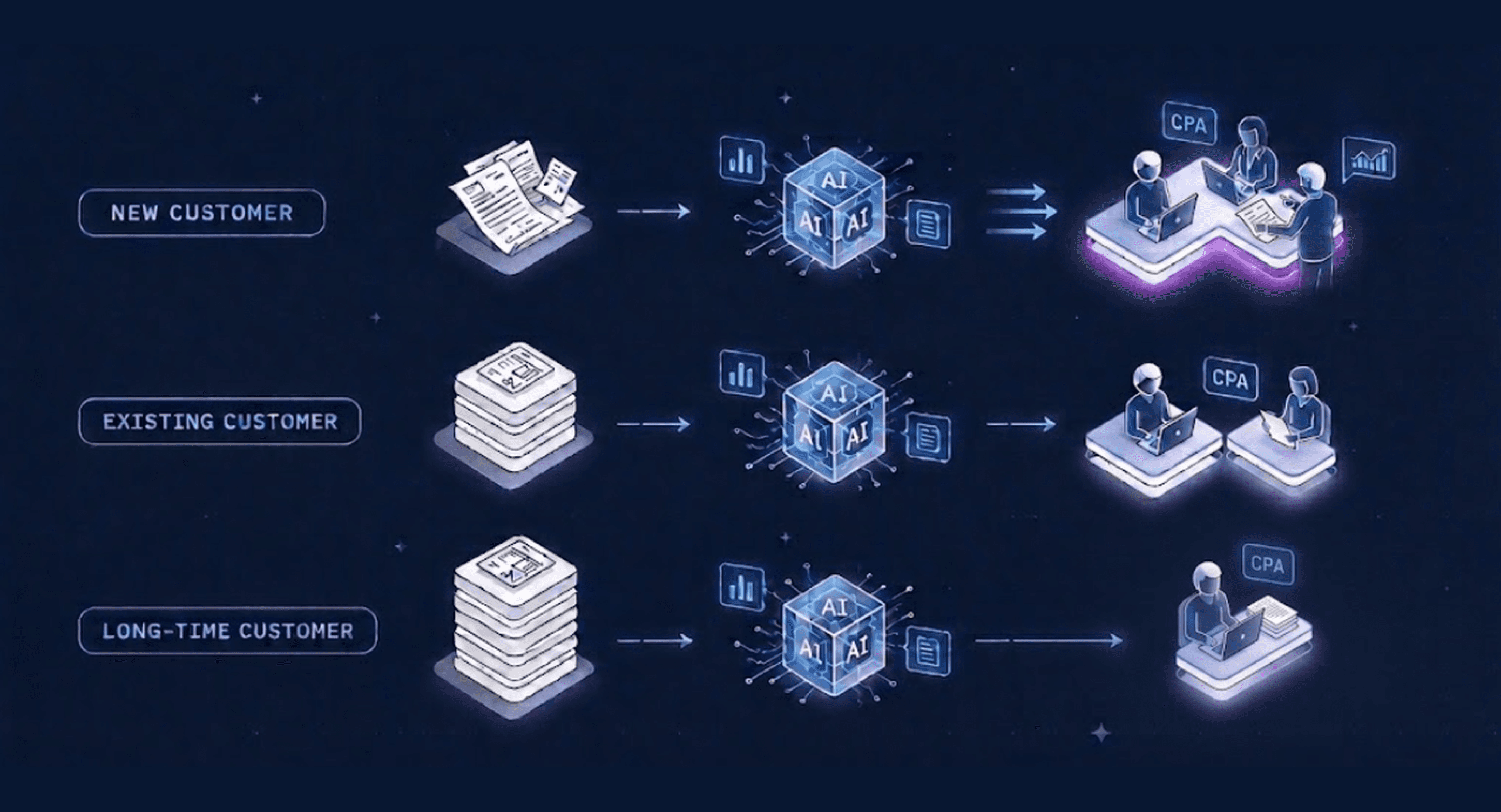
From there the AI matched transactions against the statements and flagged only the ones it was not confident about. The flags are worth describing precisely, because this is where the time goes. The system is usually right on the first pass, even on the items it flags. Out of hundreds of transactions in an account, we were typically left with two or three that a person actually had to identify.
Both accounts, eight months each, thousands of transactions: under two hours, start to finish.
What that would have cost before
A clean bank reconciliation, with no issues to chase, takes about 30 minutes by hand. Sixteen of them is a full day of work before anyone looks at a single problem. And these were not clean. Each one carried the possibility of an outstanding check, a timing difference, a duplicate, or a transaction that belonged to a period we had just excluded.
The old version of this week is a day and a half of reconciliation and a genuinely unpleasant conversation about why onboarding took longer than we said it would. That is what changed. Not the standard of the work, but what it costs to recover when something goes wrong.
What AI did not do
It did not choose the cutoff date, and it did not notice that the wrong one had been used. A person saw that the cash balances were implausible and knew what usually causes that. It did not decide that the balances were close enough to stop, because that call belongs to an accountant. It did not identify the last two or three transactions in each account, which is exactly where a person's knowledge of the business matters.
What it did was take the volume out of the recovery. The judgment stayed with us, and the busywork behind that judgment went from a day and a half to under two hours.
Working with Arclow
Arclow is an AI native accounting firm. AI handles the repetitive work, and CPAs confirm it. As our AI learns your business, our efficiency and margin improve, and we pass those savings back to you through what we call "Learning Dividends": pricing that goes down over time instead of up.
Want books that tie, and a firm that tells you when something went sideways? Reach out.
Disclaimer: This article is general information only, not legal, tax, or accounting advice, and reading it does not create an accountant client relationship.