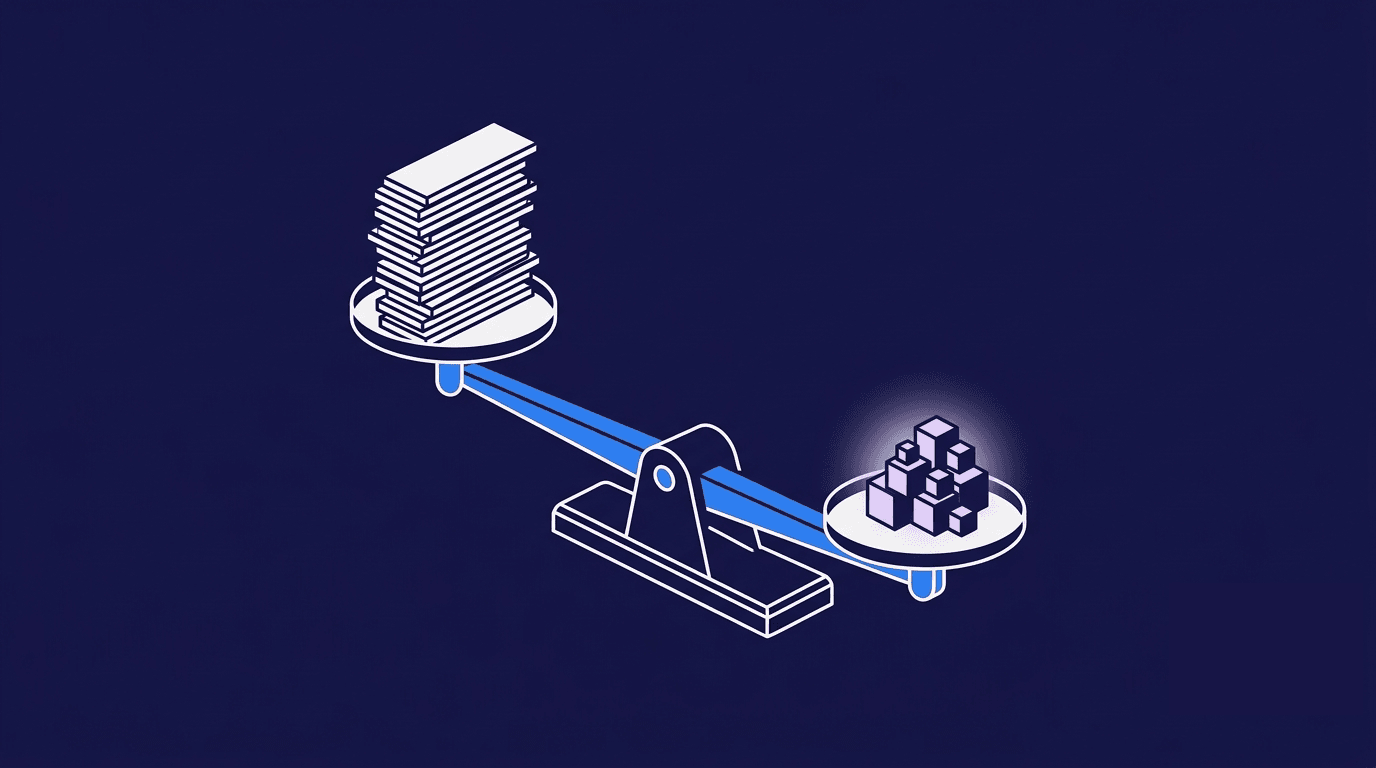
The Reconciliation Tasks That Used to Take Us a Full Day, Now Take an Hour
Insights
Same accuracy, a fraction of the time: how AI took the busywork out of reconciliation.

Published
Author

Isaac Lee, CPA
Founding Member, Accounting & Tax
Why reconciliation eats a full day in the first place
Ask most controllers what actually eats a day during close, and it's rarely the hard judgment calls. It's reconciliation, in all its forms: tying out the bank, tying out balance sheet accounts to their supporting schedules, breaking a payroll run down into what actually needs to be booked where. None of it is difficult work on its own. It's just slow, and most of it has to happen before anything else can.
A full day of that isn't unusual for a company with a handful of accounts, a few balance sheet items that need supporting detail, and a normal payroll cycle. None of the individual tasks are hard. There are just a lot of them, and they all have to happen by hand.
What actually made this slow
Three things, specifically, are what turn reconciliation into a full-day task instead of a quick one.
Ending balance tie-outs on the bank side. Getting the bank reconciliation's ending balance to actually tie used to take real time, for two different reasons. The first was timing differences: a payment processor like Stripe holds funds for a few days before settling, so a transaction hits the bank on one date and the internal ledger on another. Every one of those gaps had to be manually confirmed as a timing difference and not an actual discrepancy. The second was simpler and more painful: a transaction that was never booked at all. When entries are keyed in by hand, it's easy to miss one entirely, and the only way to find it was to go line by line through the bank statement looking for whatever wasn't already in the ledger.
Balance sheet accounts with no automatic supporting detail. Accounts like AR, AP, prepaid expenses, and accruals don't reconcile themselves. Someone has to build or update a schedule, tie the GL balance to that schedule, and explain any difference. That's manual work every single close, account by account.
Payroll entries that have to be broken apart by hand. A single payroll run isn't one number, it's several: wages, benefits, taxes, and processing fees, each of which hits a different account. Figuring out how much of a payroll withdrawal goes into each bucket used to mean going through the payroll register line by line and manually splitting it out before anything could be booked correctly.
What changed with AI in the loop
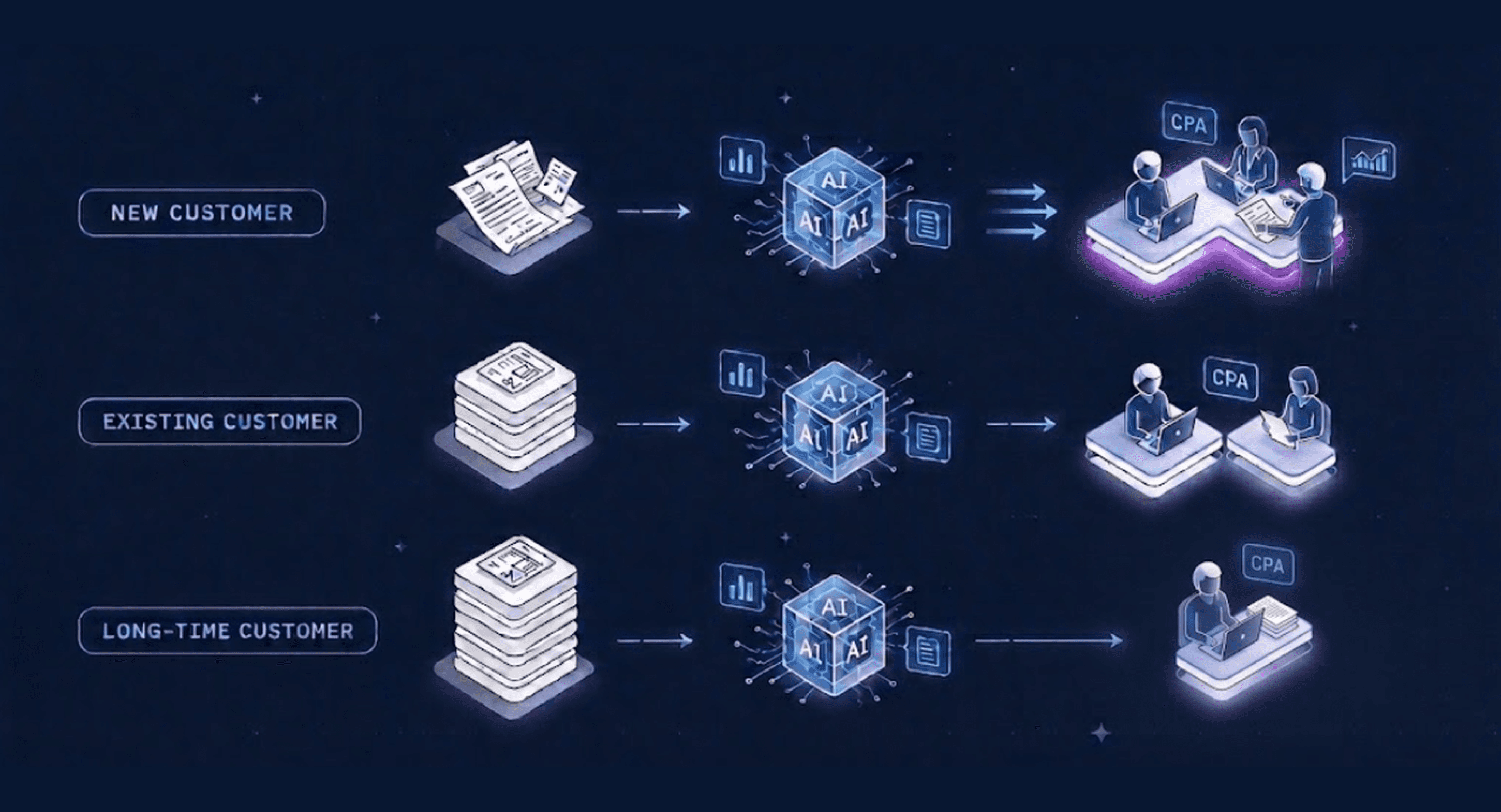
Connecting the bank and payment processor feeds directly to an AI platform took the ending balance tie-out from something that used to take real effort to something that's essentially automatic. Every transaction is captured as it happens, so there's nothing left to manually key in and nothing to accidentally miss. Timing differences stop being something a person has to track down too, since the system sees both sides of a transaction and recognizes a settlement delay for what it is.
The balance sheet side is harder to fully automate, but AI still cuts real time out of it. Some of the newer ERP platforms with AI features maintain the supporting schedule automatically. When someone books a transaction to a prepaid or fixed asset account, that entry posts straight to the schedule at the same time, no one has to separately go add it or remove it as it amortizes or depreciates. The schedule stays current on its own, so the reconciliation becomes a matter of confirming the balances agree, not rebuilding the detail behind them.
Payroll gets the same treatment. When payroll data feeds directly into the ERP, the system builds the entry itself, splitting the withdrawal into wages, benefits, and processing fees without anyone manually working through the register. It also books the movement through a payment clearing account, which captures the timing difference between what actually comes out of the employer's account and when that money actually reaches the tax authorities and benefit providers. What used to be a manual breakdown becomes an entry that's already built correctly by the time anyone looks at it.
What still needs an accountant's review
The exceptions are the point, not an inconvenience. If a balance sheet account is off, it usually means something was booked to the wrong account entirely, since the schedule itself is no longer something a person maintains by hand. On payroll, a clearing account balance that doesn't clear out as expected is usually the first sign something needs a closer look, whether that's a benefit deduction that didn't map the way it should have or a payment that didn't go out when it was supposed to. Someone still has to look at each of these and decide what actually happened. AI narrows the day's work down to that list. It doesn't replace the judgment needed to work through it.
The result
What used to take a full day now takes about an hour, and that hour is spent on the accounts and balances that actually needed a second look, not on confirming the ones that were always going to tie. The reconciliation itself doesn't get looser. It gets faster because the busywork in front of it disappears.
Working with arclow
Arclow is an AI native accounting service. AI handles the repetitive work, and CPAs confirm it. As our AI learns your business, our efficiency and margin improve, and we pass those savings back to you through what we call "Learning Dividends": pricing that goes down over time instead of up.
Want your books reconciled fast because the busywork is automated, not because it's being rushed? Reach out.
Disclaimer: Arclow is not a law firm and does not provide legal advice or legal services. This article is general information only — not legal, tax, or accounting advice — and reading it does not create an attorney-client or accountant-client relationship.